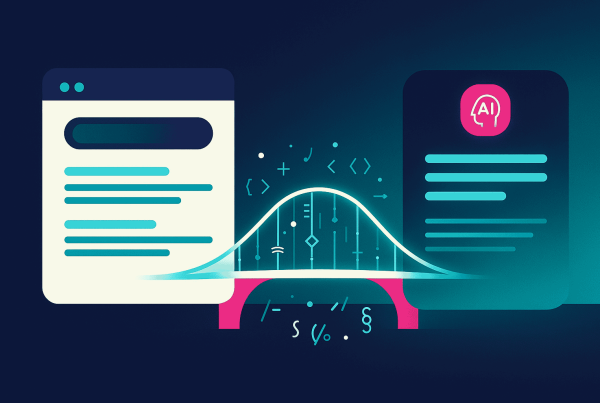
“AI analytics” is one of those hand-wavy marketing terms people use when they don’t fully understand the tech.
In plain terms, AI analytics most often refers to using machine learning models to analyze large sets of marketing or website data. So instead of just reporting what already happened (traditional analytics), AI analytics tries to predict what will happen next.
That could be things like:
- Which visitors are most likely to convert or leave
- What content or product to show them next
- When to send an email or ad for the best response
By integrating AI-driven insights into your SEO and conversion optimization strategy, you can change your tactics in real time and gain an advantage that helps you grow.
Here are seven AI analytics trends to explore.
Trend #1: AI-Powered Keyword Research
Effective marketing starts with knowing who you’re speaking to and the words they use to search. AI tools can help uncover those patterns and guide smarter campaign decisions.
Analyzing Visitor Data
AI can quickly sort through large volumes of data about how people use your website. That may include:
- Browsing patterns
- Demographics, including deeper information about your website visitors
- Repeat visits to your site
AI tools can use that data to uncover patterns, such as which topics attract repeat visitors or which pages lead to conversions. That insight helps you refine your content, improve landing pages, and focus on what matters most to your audience.
Conducting Keyword Research
Keyword research is about knowing the words and phrases your audience types into search engines when they’re looking for solutions like yours.
Depending on your specific business and marketing plan, that may include things like:
- Keywords specific to your products or services
- Questions customers ask about your products, services, or industry
- Keywords relevant to your local geographic area
AI can help identify the keywords that matter most and guide you in creating content that attracts organic traffic.
SEO is an ongoing process, and as you refine your keyword strategy over time, your visibility in search will keep improving.
Trend #2: Using AI to Optimize Conversions
Traditional conversion tracking looks at what has already happened, reviewing past interactions to see what drove sales or caused drop-offs. AI goes further by using that data to predict which visitors are most likely to convert in the moment, allowing you to adjust campaigns before opportunities are lost.
Spot and Fix Problems Before They Cost You Sales
Predictive AI can highlight the points where potential customers tend to drop off, such as:
- slow-loading pages
- unanswered questions
- changing market interests (that could make your products irrelevant)
Instead of waiting for those issues to hurt conversion, you can identify and address them early to keep prospects moving through the funnel.
Make Real-Time Adjustments
AI tools can analyze data as it comes in, helping you respond quickly to what visitors do on your site. With those insights, you can:
- streamline checkout flows
- reduce bounce rates
- fine-tune conversion paths
Trend #3: Personalization at Scale
Personalized marketing is no longer optional. It’s what customers expect. They want experiences that reflect their goals, preferences, and buying habits.
AI can analyze visitor data to recommend products, content, and offers that match those interests across channels, from email to social media to ads. And you don’t have to be a huge brand to take advantage of this.
When personalization feels genuine and consistent, it builds a stronger connection with your brand. That connection encourages first-time purchases, repeat visits, and long-term loyalty.
Trend #4: Using AI to Improve UX
User experience plays a major role in how customers engage with your site and even affects how you rank in search results.
AI tools can spot usability problems on both desktop and mobile by analyzing:
- how people navigate
- where they drop off
- how long they stay on each page
With those insights, you can simplify navigation, speed up load times, and smooth out checkout flows. Each improvement reduces friction and makes it easier for visitors to complete a purchase.
Trend #5: AI to Analyze Customer Sentiment
Positive reviews and genuine customer testimonials are one of the most effective ways to build trust and boost conversions. Shoppers often research online before deciding what to buy, whether they plan to visit a store or order online. Reviews from real customers show that your brand is reliable and delivers products or services people can count on.
So, we’re not suggesting you use AI to generate fake reviews for your site.
Instead, AI tools can analyze sentiment and extract insights from customer feedback. You can use AI to:
- review comments and testimonials to better understand how people feel about your brand
- highlight the most persuasive reviews on product pages and direct users there
- identify areas for improvement to boost customer satisfaction
Collecting and analyzing reviews isn’t just reputation management; it’s how smart brands stay attuned to their audience and continuously improve what works.
Trend #6: Automating A/B Testing with AI
Regular testing helps you understand what your audience connects with and responds to. From there, you’re often tweaking small details on your site with the insights you gain. But when many factors are in play, it can be hard to pinpoint what really works.
Manual testing can be slow and messy, offering little clear insight. AI tools streamline A/B testing by quickly comparing versions of landing pages, calls to action, and messages. AI can make it faster and easier to see which changes drive the best results.
Trend #7: Integrating AI with Google Analytics
Combining AI predictive analytics with Google Analytics provides a clearer, more complete view when evaluating your marketing efforts. That includes website traffic, user behavior, and conversion metrics.
Integrating AI can help you:
Track campaign performance more effectively
Gain real-time visibility into how campaigns perform across different platforms and identify which ones resonate most with your audience.
Spot cross-industry trends
With AI-enhanced analytics, you can monitor patterns within and beyond your industry to better understand market position and anticipate shifts in customer behavior. These insights also reveal where to adjust your strategy to stay competitive.
Optimize e-commerce sites for stronger engagement
The blend of AI and Google Analytics shows which website changes most influence customer behavior, helping you improve engagement and implement updates faster.
Using AI in this way supports smarter, data-informed decisions. All the information you need stays within reach, so you can act on it quickly.
Embrace AI Predictive Analytics
Driving conversion rates is as important as ever, even as the strategies to achieve that continue to change. Staying ahead means using new tools to better understand your audience and how to reach them. These seven trends are practical ways to make your website smoother, your content more powerful, and to create experiences that turn visitors into loyal customers.
These seven trends are practical ways to make your website smoother, your content more powerful, and to create experiences that turn visitors into loyal customers.
To take your content strategy further, explore Verblio Plus, a full-service solution that delivers high-quality, tailored content designed to connect with your audience and drive real results. Stay curious, stay competitive, and keep improving how you market online.
Source link